


Ski resorts and lift stations
Bottom of a piste, gondola arrival, resort base: a catering point that holds through the winter and closes up in spring.

Food truck containers
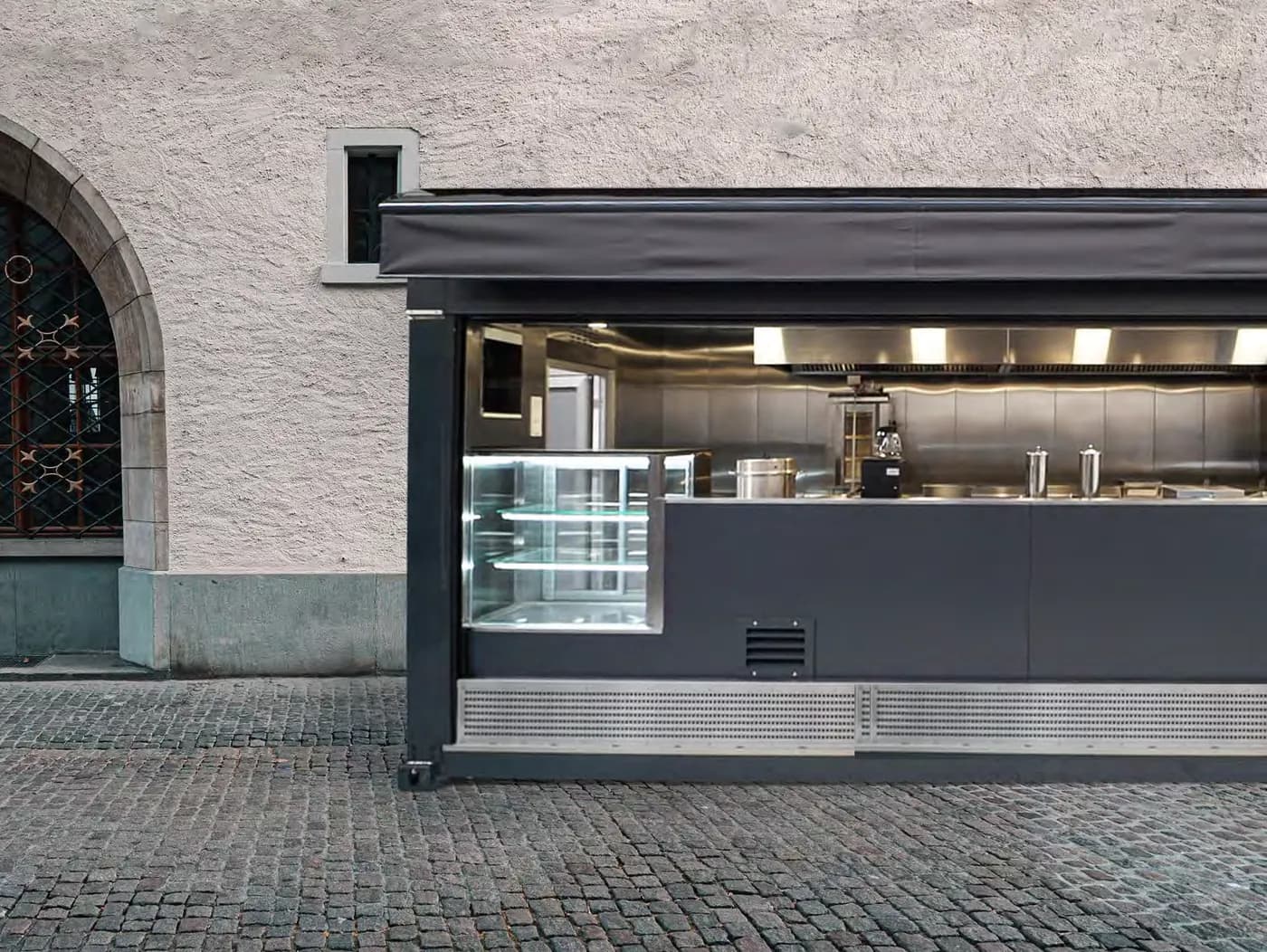
A container fitted out as a kitchen, insulated all round with 90 mm of rock wool, available in 10, 15 or 20 feet. It is craned in, set level on your pitch, connected to the site supply, and locked shut when the season ends.
The range
Width, height, insulation and standard fit-out are identical across the three formats. All you choose is the run of worktop your menu needs. Switch the front to see the container in service, then closed.
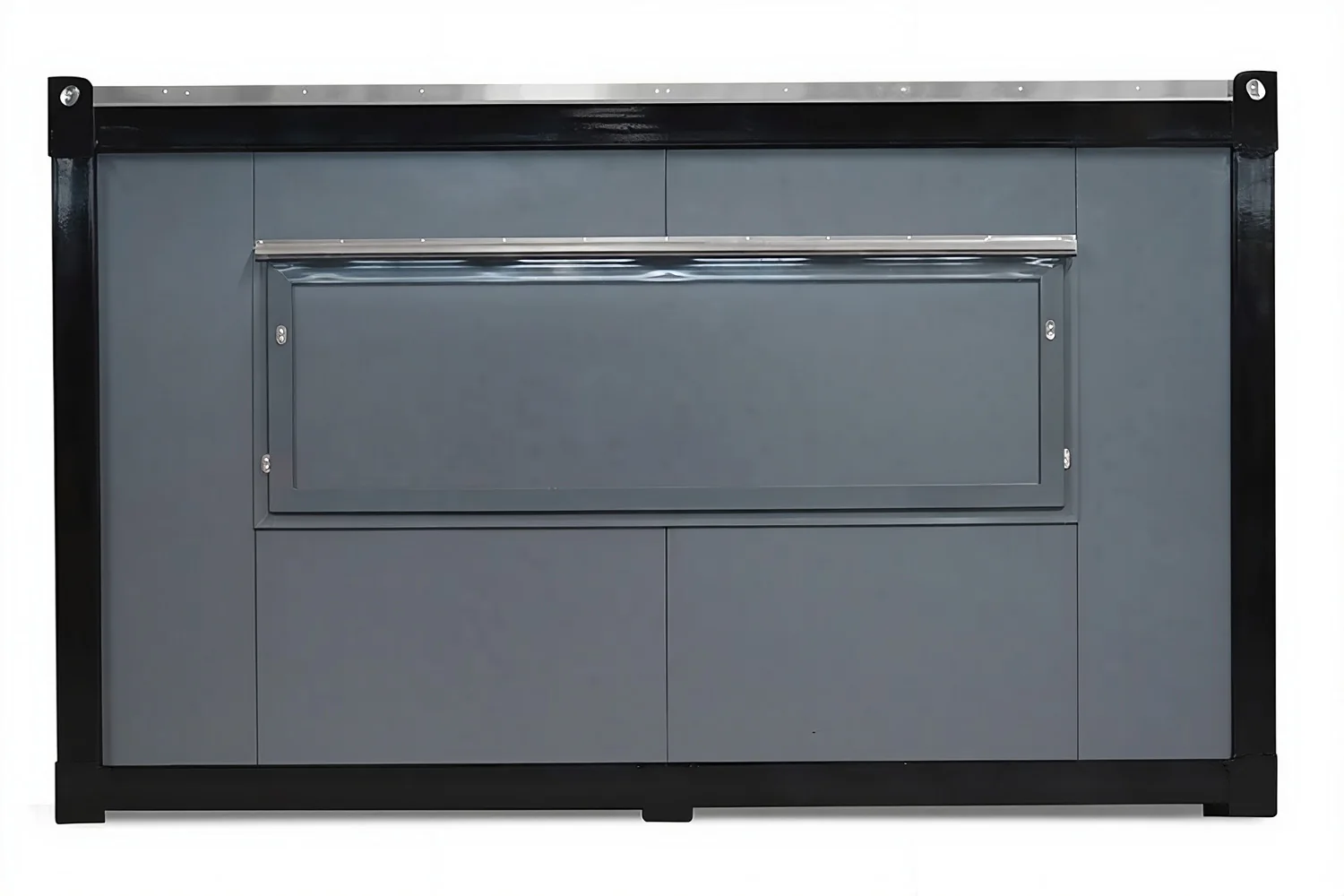
Overall dimensions, excluding awning and terrace. The footprint is the pitch area you need to set aside.
Choosing a length
The usable width is the same on all three. What changes is the run of worktop, so the number of cooking stations you can line up and the number of people who can work inside without getting in each other's way.
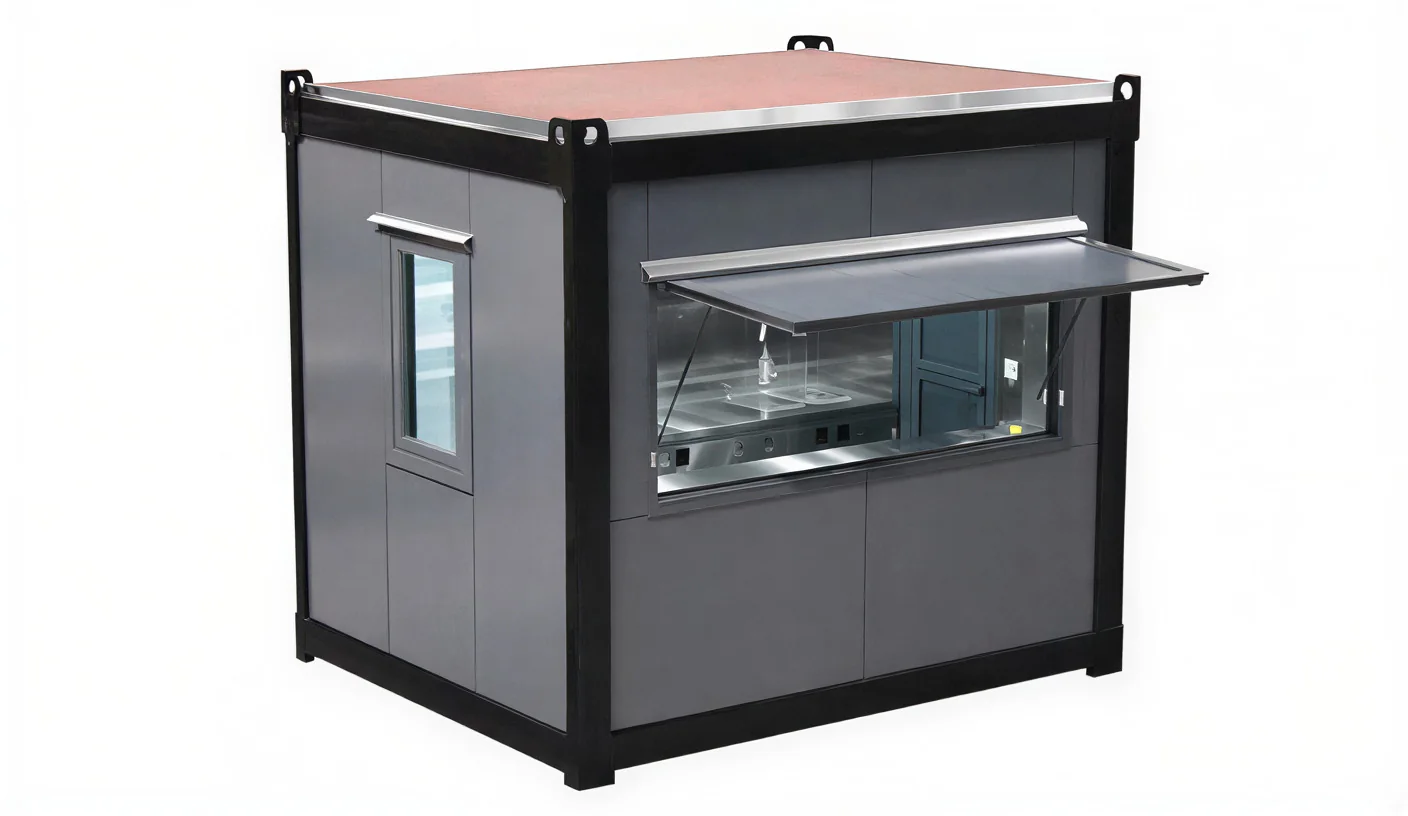
One station, one person
A short menu and quick service: hot drinks, snacks, a single cooking station. The format that fits where space is tight, at the bottom of a piste or on a forecourt.
Footprint 7,2 m²
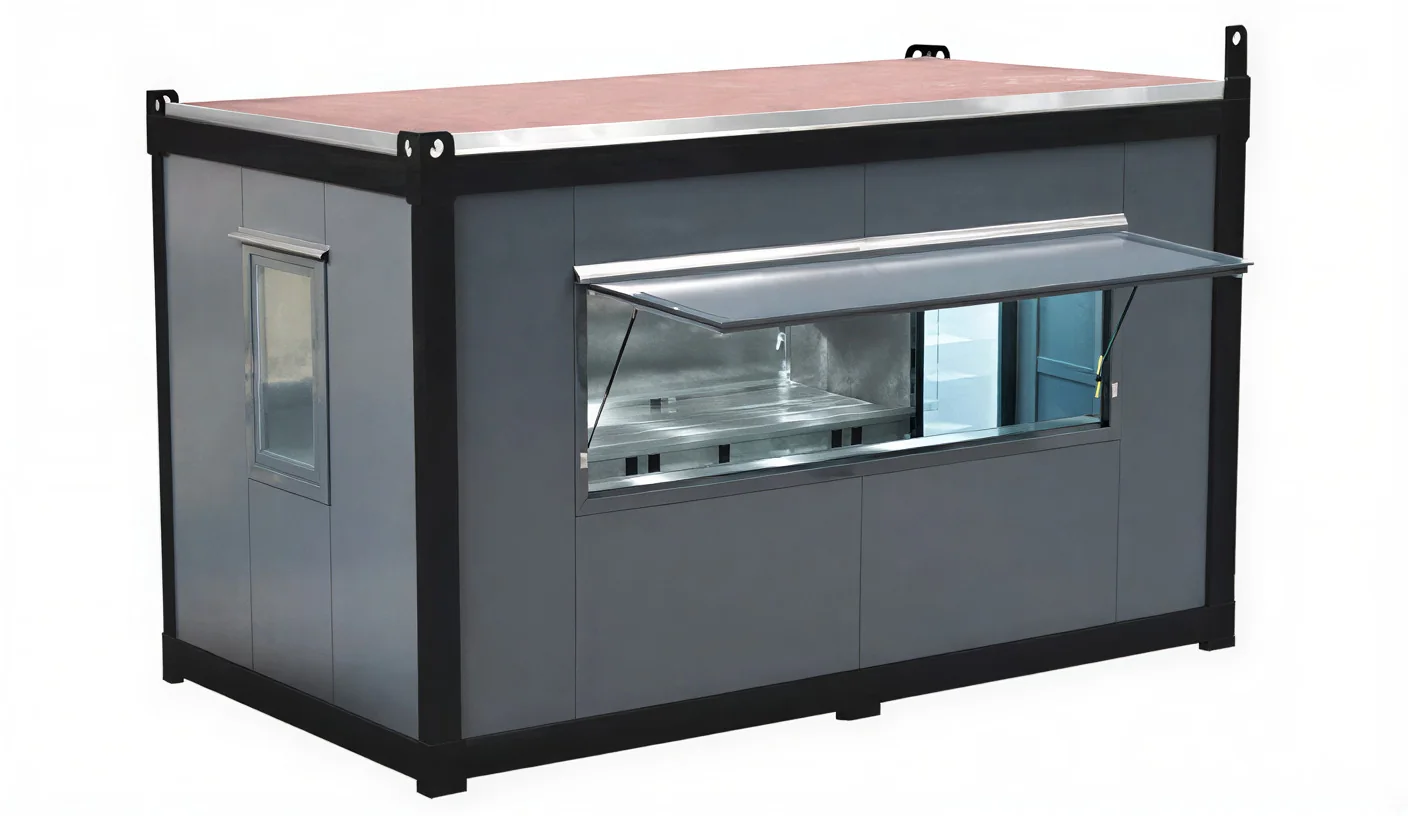
Two stations, two people
The most requested format: enough room to keep cooking and the till apart and run a full lunch service without treading on each other.
Footprint 10,7 m²
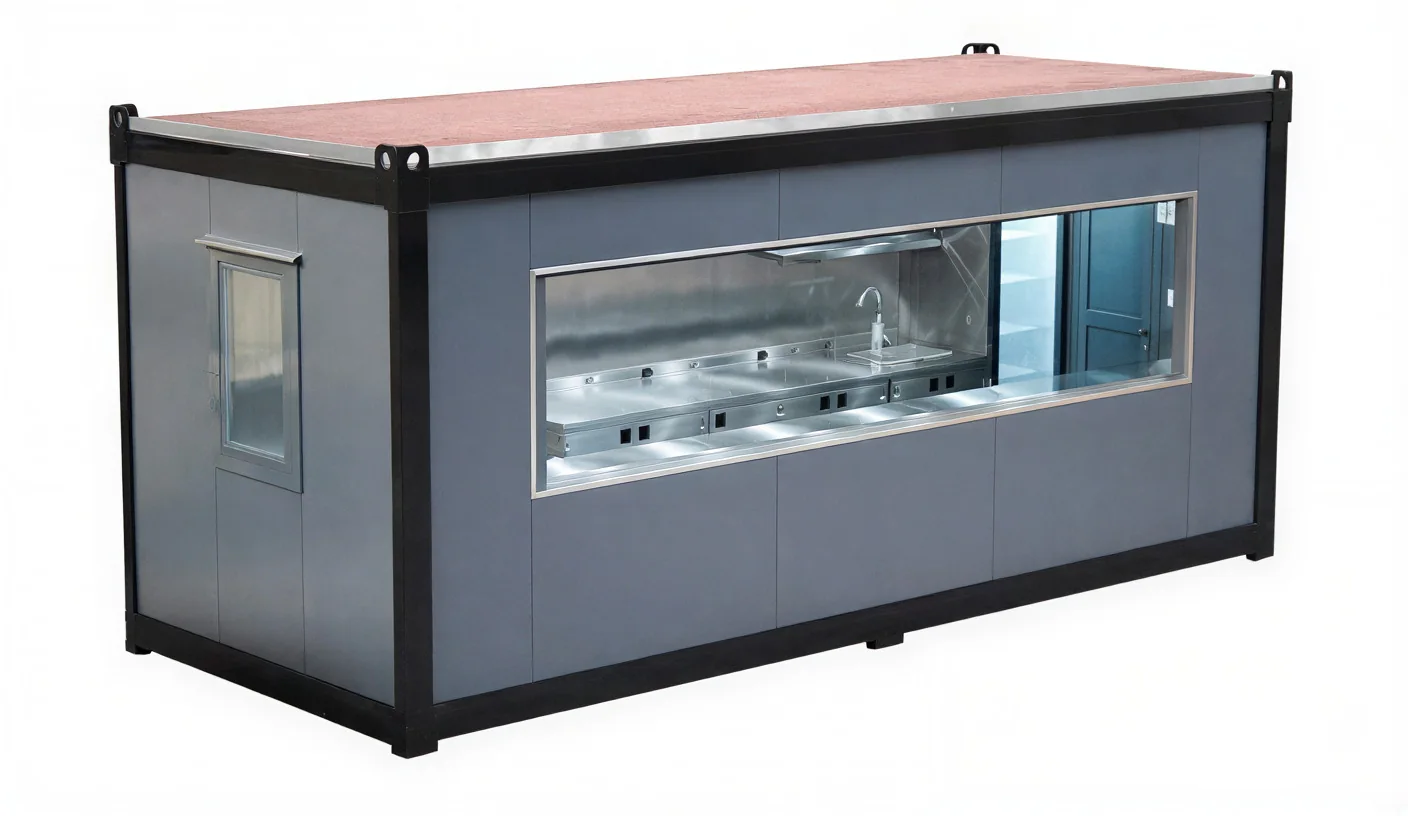
A proper kitchen
Several cooking stations, refrigeration, storage and a plating bench. This is the format for operations that trade every day of a full season.
Footprint 14,3 m²
Insulation
A poorly insulated container at altitude means an unworkable space first thing, energy costs that get away from you, and condensation across every stainless surface. Here the shell is insulated over its whole area, walls, ceiling and floor included.
You bring the container up to temperature at opening without heating a space whose warmth goes straight back out through the walls.
Full alpine sun or a baking forecourt: rock wool works both ways.
What you do not lose through the walls, you do not pay for again in heating and cooling every day of the season.
An insulated wall stays close to air temperature, so cooking steam does not run down the stainless.
Outside to inside, as it leaves the production line. The thicknesses shown are drawn for legibility, not to scale.
The painted outer skin, which takes rain, frost and UV without rusting.
The thickness that does the work. Electrical and water runs sit buried inside it, so nothing is routed along the walls.
The inner wall, in food-grade stainless steel you can hose down, and what the worktops are fixed to.
As standard
The six points below are part of the container whichever length you go for. Cooking stations, refrigeration and layout are settled with you afterwards.
90 mm across walls, ceiling and floor, with the services buried in the insulation.
Walls and backs in food-grade stainless steel, hose-down washable, in line with what cantonal hygiene services expect.
Aluminium sheet over an insulated floor: it hoses down, it does not get slippery, and it takes the snow walked in on boots.
The large service opening closes and locks: out of service, the container is a closed, secure unit again.
Ceiling strips over the worktop and front lighting so you stay visible once it gets dark.
The container connects three-phase to the site supply: enough power for heavy equipment without relying on gas.
The container runs on a direct connection: electricity, clean water and waste water come from the site. If your pitch supplies none of that, we look at solar, a tank and a generator together.
Siting
A container is not a vehicle: no plates, no roadworthiness test, no towing licence. It arrives on a lorry, is set down in the right spot, and leaves when the season ends. Its dimensions are those of container transport, so it can be handled anywhere a crane truck can reach.
The container is picked up from above by crane, with no dismantling and no special preparation.
It travels to standard container transport dimensions: an ordinary container lorry is enough, mountain roads included.
No special slab to pour: concrete, paving or stone, it just needs to sit level before electricity and water are hooked up.
Serving window shut, supplies disconnected, and it waits on site or goes back into storage until the next opening.
Where we install them
As soon as the outlet stays in one place for a whole season, and that place is exposed or hard to reach, the container becomes the simplest format to run.
Bottom of a piste, gondola arrival, resort base: a catering point that holds through the winter and closes up in spring.
Where there is neither a building nor a permanent connection, but there is footfall for a few months a year.
A seasonal kitchen that opens in June, trades all summer and disappears in September.
Feeding staff on a site with no canteen, for the length of the job and no longer.
Christmas markets, festivals, fan zones: when you stay a month rather than a weekend.
A hot food point dropped onto a company car park or an out-of-town site, with no building work and no commercial lease.
The right format
Both serve the same menu to the same standard of finish. What separates them is how often you move your outlet.
Options
A mountain or roadside pitch does not come with the comforts of a town centre. This equipment goes in at order stage, not afterwards.
600 to 1800 W on the roof to cover lighting, refrigeration and the till where the supply is limited.
Up to 7 m³ at +4 °C inside the container: enough to trade for several days without a delivery.
Twin split of 24,000 to 30,000 BTU to hold temperature in full service, summer and winter alike.
A 60 to 100 litre boiler for the hand basin and washing up, so you are not reliant on what the site provides.
A roof terrace reached by stairs, or a hydraulic platform that folds out a service area at ground level.
Front paintwork, wrapping, remote-controlled lit awning: the container carries your name, not ours.
In Switzerland
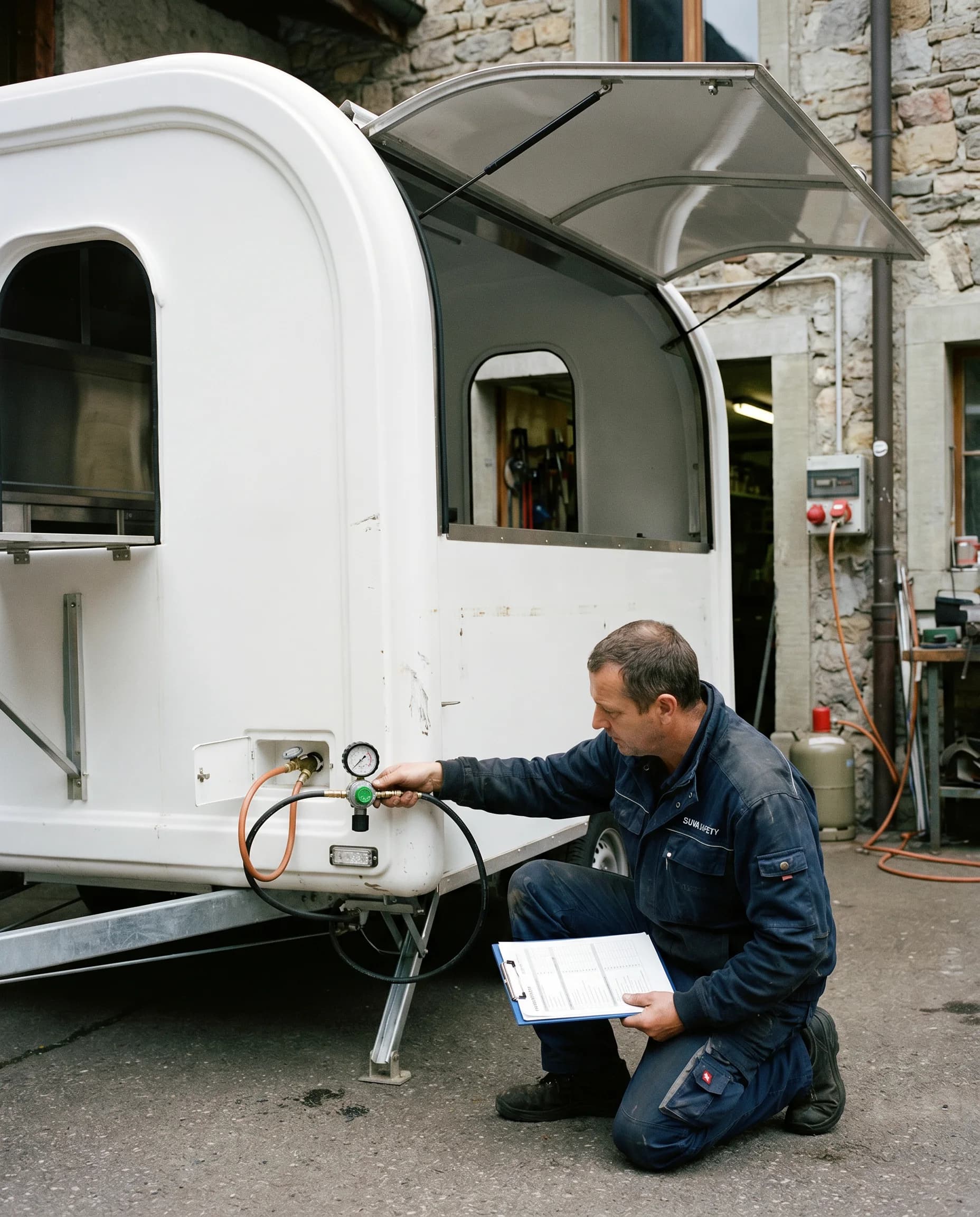
A container fresh from the production line cannot yet be operated here. We rework the electrical installation so it passes the NIV inspection, fit the water points and hand basin that cantonal hygiene services expect, and give you the corresponding reports.
That leaves the question of the pitch. Set down on land, a container usually needs a permit from the commune, and sometimes a temporary building permit depending on how long it stays. We tell you at the scoping stage what your commune will ask for, and we put the application together with you.
Contact us
Tell us about your concept: we guide you to the right format, the right equipment and a vehicle 100% compliant with Swiss standards, without you having to handle a thing.